
Bogdan Arhip (Mr. Cuponescu): “For us, around 200 of the 800 listed stores generate revenue”
It took Bogdan Arhip, a coupon affiliate in BusinessLeague, two years to climb the competition rankings up to #9 in Companies—a leaderboard he used to check much more often back when he was #1 in Freelancers and Start-Ups 😄

Bogdan cares about people who come back to the Cuponescu website, and I care about people who have something worth saying. I knew he belonged in that category because I’ve enjoyed listening to him every single time we met at events.
Bogdan and Radu joined BusinessLeague two years ago and celebrated their very first commissions back then with fanfare and high optimism. Both were well justified: today, from a Top 10 spot in the BusinessLeague Companies leaderboard, MrCuponescu works with around 200 online stores.
So why did I invite him for coffee right in the heart of town? Because he’s passionate about tennis, just like me? Yes, but even more than that: because Bogdan is a classic example of a hardworking, smart affiliate who knows that when you bring genuine value to your partners, good things add up.
One of those good things is the interview below.
A bit of background
Bogdan graduated from the Bucharest University of Economic Studies (ASE) and completed a master’s degree in Human Resources, focusing on training. For a while, he even considered becoming a trainer. Since university, however, he had been working in sales at an HP partner, so after graduating he joined HP itself—then one of Romania’s top employers. He stayed there for about three years.
Next came a cybersecurity company, BullGuard, where he spent around ten years in sales and partnerships. That’s where he made friends he still keeps today, and it’s also where he met his current business partner. They were colleagues first, then friends, and the idea of starting a business together came up on… the tennis court 😄
Affiliate marketing, seen from the inside
He first learned about affiliate marketing while working at BullGuard. The marketing team shared the same office as the sales team and had one dedicated person for each channel: one on paid ads, one on SEO, and one dedicated to affiliate marketing globally. For a consumer antivirus product, direct sales, paid media, and affiliate marketing were the three pillars working hand in hand.
“For us, affiliate marketing was an important channel.”
The key condition, he says, is making sure it doesn’t conflict with the other channels. If you structure them properly, affiliate marketing only costs you the commission. That is precisely why it surprises him that many Romanian e-commerce entrepreneurs—some of them active for years—don’t even know affiliate marketing exists.
The 50-lei coffee
About two years ago, Bogdan was involved in a startup that wasn’t going very well. His partner was also looking for a new direction, so they decided to try building something together. They had former colleagues around them who were already working in affiliate marketing or running online stores, so they knew what such a business looked like and what potential it held. From day one, the plan was to launch in Romania and then expand into multiple countries.
They started with a website called Reduceri Prețuri, then moved on to Cuponescu. They knew 2Performant was the most important affiliate channel in Romania, though they had never run campaigns on the platform before.
“I still remember how excited we were when we saw the first commission, and then the second, and the third.”
Back then, a good day meant around €10 in commissions—roughly 50 lei: “look, we just paid for our coffee.” Months of testing followed. They started with the big stores—the ones with the highest traffic and those offering discount codes—and later began asking for custom codes. In the beginning, everything was done “by feel”: they published offers, watched where traffic came from, and focused their energy there.
The returning customer
Today, Cuponescu lists 800–900 stores, of which 150–200 actively generate revenue. Ideally, Bogdan says, they would work with 90% of the stores that accept discount codes, because every additional store means one more coupon for the user.
The real stake, however, isn’t the click—it’s the person who comes back.
“We care about people who return directly to our website without necessarily searching for us on Google anymore.”
If you used a coupon once that actually worked and got you a 5% or 10% discount, next time you’ll come straight back. For Bogdan, that defines quality: delivering a good user experience, not just chasing a click. Plenty of clicks, he notes, bring zero value.
What makes a good partnership
For a coupon website, the recipe is simple: custom discount codes or, at the very least, discount codes provided consistently. That is, as he puts it, “our bread and butter.”
“You have to give people discount codes that actually work.”
A store’s search volume matters too. Without it, even the best codes won’t drive conversions. Bogdan is candid about the role coupon affiliates play:
“We, coupon affiliates, increase conversion rates, but we don’t necessarily grow a store’s customer base from scratch.”
That is why they focus on stores that already have traffic volume and prefer offering discounts through approved partners rather than directly on their own storefront.
Communication, balanced against resources
Some top affiliates say they don’t need to talk to stores because the platform gives them everything they need. Bogdan looks at it in terms of time: many affiliate businesses consist of just one, two, or three people, so you have to choose carefully where to invest the hours in your day.
His recommendation: steady—though not necessarily daily—communication with the stores where you drive the highest volume, both for joint campaigns and to be prepared ahead of major peaks like Black Friday. And alongside the stores, maintaining a strong relationship with the account managers at the affiliate platform, who can share tips and tricks you might not spot on your own.
He appreciates being able to message stores directly in 2Performant—something that is more of an exception on other networks. Still, that feature is used mainly by top affiliates who understand how much it matters. What would help him even more: events attended by as many online stores as possible. At several BusinessLeague events, he spoke directly with store representatives and found it “super useful.”
Bulgaria, Greece, Poland
MrCuponescu works with all affiliate networks so they can list as many stores as possible, especially after expanding into Bulgaria, Greece, and Poland. The first expansion happened almost by chance: they were invited to an e-commerce event in Bulgaria and “that’s where we caught the bug.” Greece and Poland followed for regional reasons.
Because these are organic-traffic websites, they required time and quality content, but they grew steadily and have started generating revenue in those markets as well.
His advice for an affiliate looking to expand outside Romania sounds simple, yet it is spot on:
“Analyze the market thoroughly.”
That means studying the competitors, the local affiliate networks, and the total value of e-commerce transactions in that country.
The team
The team has remained small. Lately they have focused heavily on automation, and with the help of AI they have built internal tools that save them significant time. One person helps with social media, and starting next year they plan to invest more there—including across their international accounts. An active community on Facebook or Instagram, Bogdan notes, sends very strong signals to Google.
Black Friday: stores came to us
This Black Friday went well, and something noticeable shifted:
“Stores came to us asking for additional promotion.”
In the past, they had to chase the stores. Even better, several stores they initially doubted they could help much ended up seeing strong results once their offers were listed. At the same time, the number of users visiting the site directly or searching specifically for the Cuponescu brand grew exponentially.
Companies, step by step
The leaderboard doesn’t always drive their daily decisions, yet their growth over the two years since joining BusinessLeague is unmistakable: from Freelancers to Start-Ups, and now to Companies. Climbing through the first tiers came relatively naturally, including reaching #1. In Companies, Bogdan says, things get much more serious: they currently sit at #9, and by their own estimates they rank among the top 3 coupon websites.
They haven’t chased Challenges at this tier either. In Start-Ups they used to win speed and revenue challenges, whereas in Companies they compete against CSS players who can rapidly scale ad budgets—a pace organic traffic simply cannot match on demand.
“We like entering a Challenge when we know we have a real shot.”
What’s next
The plan ahead is building a regional umbrella brand bringing together all their coupon websites, entering one or two new markets after careful analysis, and investing consistently in branding and social media over the coming year.
Fingers crossed for them 😃

Articole Recomandate
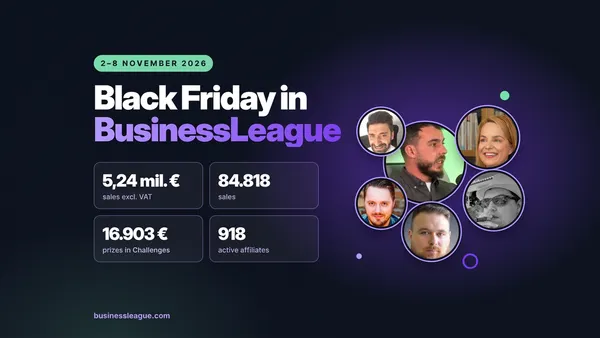

Black Friday 2026: A Week of Many Challenges and Broken Records
We’re catching our breath after the biggest Friday of the year in e-commerce—though not for too long, because for years now, Black Friday hasn’t meant just one exhausting day. It means several exhausting days 😀
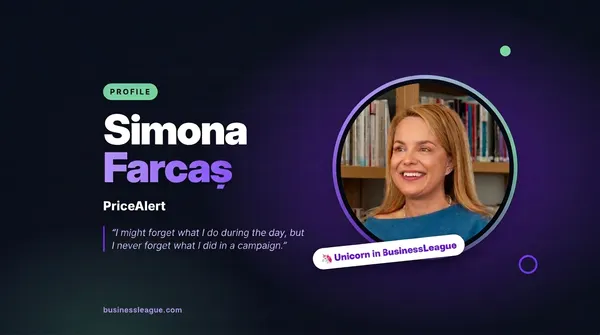
Simona Farcaș: “The Plan for 2027 Is to Expand into Markets Outside Romania”
From insurance straight to #2 among BusinessLeague Unicorns? Nope—not overnight, but through time and a lot of hard work. Simona Farcaș (PriceAlert) talked to us about competition, product feeds, AI, and her plan for international markets.
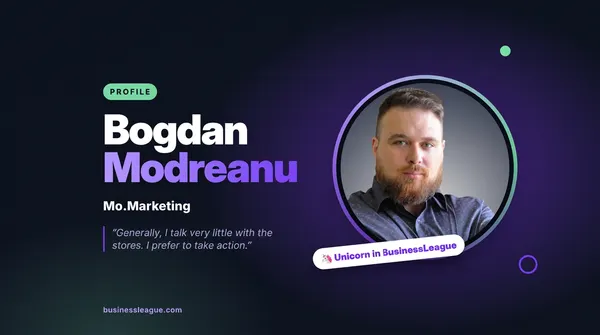
Bogdan Modreanu (aka Mo.Marketing): “We Have a Clear Strategy, We Work with 350 Stores”
Ranked #3 among BusinessLeague Unicorns, Bogdan Modreanu speaks openly about profit, pricing, and why he doesn’t believe in too much talk. We’re lucky we caught him for a conversation 😄

Lucian Ionescu, Klikads.ro: “Other People’s Success Fuels Me”
From unloading trucks to ranking among Romania’s top marketers. Lucian Ionescu has done affiliate marketing since 2015, pioneered Google Ads in Romanian affiliate marketing, and is today a BusinessLeague Unicorn. We talked to him about money, mentorship, and affiliate marketing.