
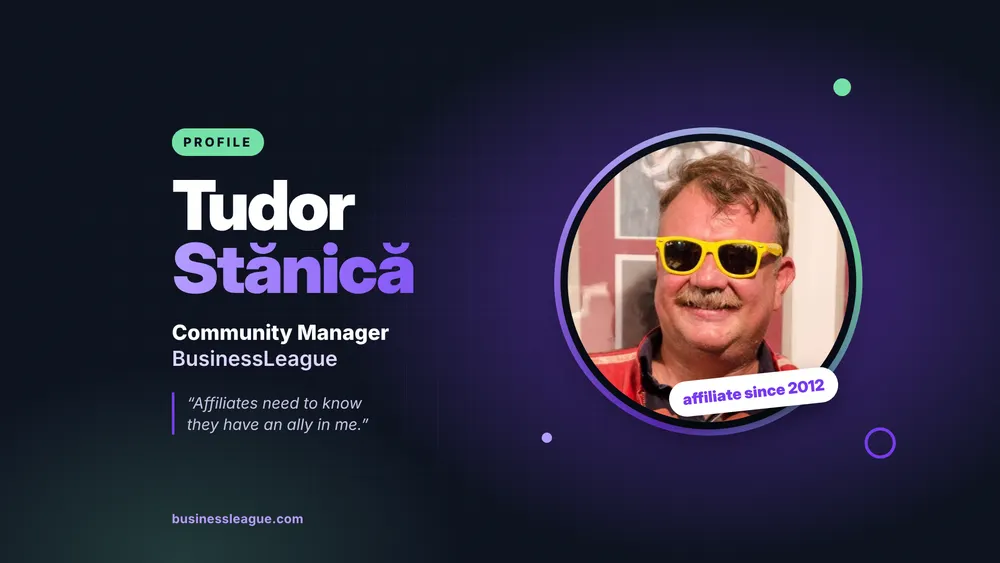
Tudor Stănică (Community Manager, BusinessLeague): “Surprises are what get me out of bed every morning”
He used to be an affiliate and sat at dinners hosted by advertisers. 5 years ago he joined BusinessLeague, and today he’s a Community Manager. Here’s the profile of a man who knows both how many sales his affiliates make and how many kids they have.
Last week I did something I hadn't done in a long time: I went to the park in the middle of the week just to talk to someone. Weird. I'll do it again.
What did I talk about with Tudor Stănică, community boss of BusinessLeague in all things affiliate? Plenty, and in depth. Two hours of affiliate marketing, motorcycles, good stores and crazy stores, money made and money lost, books, Greece, and one more thing I jotted down on the napkin from my boiled corn: a job done with pleasure.
Yes, these are strange times. Yes, people are a bit scared. But most likely it's these same people who will find the solutions that help us get back to a so-called normal we can live with.
A good community manager
Tudor told me that on the days he works from home, his wife can't work side by side with him, because he really does spend too much time on calls. Some people are made to talk a lot, which is why this article turned out so long.
The detail says a lot about his job. For Tudor, community management is more an ongoing exercise in problem-solving than anything else. It's a conversation with affiliates who either make a living from this or are just starting out and looking for their way. Tudor is the guy who holds the flashlight for a while, until their eyes adjust to the dark.
On the affiliate side since 2012
Before he became the person affiliates come to with their problems, Tudor was one of them.
"I started in affiliate marketing a long time ago, somewhere around 2012, and I did it with passion. I actually made money from the very first month. I was profitable from the start."
He still remembers his first sale. "It was a celebration: I opened a bottle of beer, of champagne, whatever. The first sale is exactly the confirmation that what you started works."
Good years followed, with preferential relationships with stores, meetings and dinner invitations from them. "So I was probably appreciated, too," he says. He worked with the network back when it was still called 2Parale, and he went to all kinds of meetups that he now organizes himself. Actually, take a look:
The curiosity that brought him to the BusinessLeague team
Five years ago, curiosity won. "I thought the network had evolved extraordinarily well, and I was convinced there were some wonderful people behind it whose work isn't necessarily visible." He knew a few of them: Dorin Boerescu and the affiliate managers who kept in touch with him. He wanted to see what things looked like from the inside.
What he found surprised him.
I was convinced there was a technical team behind it making things work and that everything was very well set up. What I didn't know was that there were so many people truly dedicated to the relationship with the stores.
He found, he says, far more positive energy than he expected. The team and the energy have grown since then, so you can imagine 😀
For an extrovert like him, it's no surprise that the human side is the very heart of the job. "Being an affiliate manager is exactly about the direct connection with the people in your portfolio. You don't just know that their numbers are better or worse, that last month was better than this one. You also know how many kids they have, you know one of them is sick or that the little one is teething." If you're reading these lines in a dentist's waiting room, don't forget to complain to Tudor that the doctor overdid it.
During our conversation, I called BusinessLeague players "clients." He corrected me: they're partners, both the affiliates and the clients. And partnerships, like friendships and campfires, need tending: affiliates are the people he meets often, especially at in-person events, where "things flow naturally, even when we're not talking business." His conclusion is simple: "Getting to know the person is very important."
Trust, surprises and a Google robot
The hardest part of his job is still earning people's trust, and the problems affiliates bring him come in all shapes. Either they haven't been paid their commission, or a store has hit its budget cap. Or, in the nice version, they're earning well and want to earn even more, but aren't sure how to handle the good streak.
Some things aren't up to him or the BusinessLeague team, and that's just how it is. The classic example is the affiliate whose Google accounts get shut down. "It's not even Google as a company shutting them down, or a person at Google you could at least talk to, but a robot." The stakes are real:
Of the top 150 affiliates we talk to every day, I think more than a third, maybe close to half, are people who make a living from this. And they come to me because they hope I can help them.
Tudor talks about his job with an enthusiasm I've rarely seen. The title of this piece probably says it all: "Surprises are what get me out of bed every morning." Otherwise the job would be very boring. The truth is that affiliates don't reach out when you want, where you want, or on the channel you want. Sometimes they don't have any problem at all, they just want to ask something.
What he looks for in a new affiliate: potential, not numbers
You'd think a community manager looks at sales first. Not quite: Tudor says it's the exact opposite. "I'm not interested, first and foremost, in how many sales an affiliate makes or how much revenue they generate in 2Performant. I'm interested in potential." He isn't necessarily looking for "another Ovidiu Golea," but for people who persevere. Even if they have no sales and no clicks, they should have drive and an ambitious project.
A good example is how he kept in touch with an affiliate who, for two years, didn't make a single sale in BusinessLeague, but then blew up. Why? Because he saw potential in the project. He told me about him like a football scout who never tires of watching the Dutch third division, because he spotted something there.
Tudor's argument is simple: whoever has the patience to build for that long finds it much harder to quit and ends up monetizing.
First steps: the basics, the niche, the community
For those who have just signed up on the platform, Tudor's advice starts with a warning. You don't need to start (and usually you don't have the means to start anyway) with a huge budget, €100,000 behind you and Google Ads campaigns. If you don't have experience, you'll lose the money. A simple TikTok or Facebook page is fine.
The order is different: a well-set-up account, a description, your promotion methods and a clear niche. Then you reach out to the stores, because the closest possible relationships with stores are, essentially, the foundation of your continuity and growth as an affiliate.
Books, says Tudor, are an excellent example. If you promote books, you contact all the stores that sell books, work with all of them and integrate them into your project. It could be a blog where you review the books you've read and add affiliate links to the stores that sell them.
So, more important than budget is how close you are to your community, what its interests are and how well you know it. But first you have to build it. That community can be made up of just 10 people. If you know their preferences really well, those 10 people will buy 10 books every month. What you learn about them you can then scale to much larger communities. And that, Tudor says, "isn't done with financial investment, but with an investment of energy, time and good spirits. If you don't do things with passion, it will show."
The biggest mistake: quitting before you can draw conclusions
From where he sits, Tudor sees both possible endings every day. He sees affiliates who send traffic to stores for a week or a month, then decide it's too complicated (sometimes it really is, haha). And he sees affiliates who have been doing this for 10–15 years. Many of them make a living from it, and some "spend the winter in Thailand when it's cold here, because they can afford to."
It's only glamorous for a few. Which few? Surprise: the ones who work hard. The difference between them is perseverance.
At first it seems very simple. Then you run into difficulties, conclude it's too complicated, and step away exactly when you should be reaping the rewards.
The first sale can come in half an hour, in a day or in six months, depending on the path you choose. This is discussed at length in the webinars BusinessLeague is running these days, so don't forget to check out our calendar:
Why not do it alone
We know there's an abundance of information and resources out there: AIs, YouTube, tutorials. What they don't give you is confirmation. The kind of confirmation (or, on the contrary, the kind of nudge) you won't get by talking to an AI, but by being part of a community where you talk to people who have the same problems as you, and some of them have already solved them.
A coach can become a gold mine for a talented marketer, on one condition: that you're curious and you want it. In other words, perseverance. And competition is part of the same BusinessLeague logic. Tudor has worked in many networks and has seen what numbers are public out there. The fact that in BusinessLeague you can see where you stand compared to everyone else strikes him as truly unique. Affiliates, stores and investors tell us this every day. Heck, sometimes we have to remind ourselves too, that's how rare this is.
But it can be a bit tough sometimes: someone with a project you consider weaker can overtake you. And while our community managers always focus on the relationship with the person, the leaderboard is obsessed with numbers, because that's what a leaderboard is for: counting sales and clicks.
9-to-5 vs. 7-to-7
For people used to fixed hours and a monthly salary, switching to a performance mindset can be intimidating. But Tudor believes it happens naturally. Sort of 😄
In a job, you're used to being told what to do, but in affiliate marketing, the decisions are always yours.
So, entrepreneurship. Tudor has often seen affiliate marketing become so interesting and productive that people make the full shift: from a 9-to-5 job to one that "often isn't 9-to-5, but actually 7-to-7." Is that good or bad? Depends on who you ask.
Latin blood and Germanic patience
Working more and more with affiliates from outside Romania, he also notices differences that are often big. Foreign affiliates give feedback much more often and say directly what they think, praising or scolding, as the case may be. "They've often told me that what I do for them and the conversations we have don't happen anywhere in other networks." Romanians, he believes, are used to this kind of relationship and find it natural.
The difference also shows in expectations. "I think Romanian affiliates have this Latin blood. It's not necessarily a flaw, it's a trait of ours: we want results fast." At the other end, affiliates from other cultures expect slow growth and profit at the end of many months. They focus on growth first and have the patience to get to profit.
I asked him whether he feels stores are more consistent in affiliate marketing than marketers. He isn't convinced. Yes, it's harder for a store to give up, because it has employees, stock and investments. An affiliate seems able to switch everything off with a button. "But working every day with top affiliates, I can tell you that once you've had a taste of something that works well, it's much harder to give it up."
At the top, among the Unicorns, Corporations and even Companies, he says, affiliate marketing becomes a business. He has more often met affiliates with the problem "I need to hire someone, I can't keep up" than affiliates who shut down. And those who left often came back, out of nostalgia for an environment where no two days are alike, especially now that AI is shaking everything up.
Why he isn't going back to affiliate marketing
I poked the bear and asked him why he doesn't rejoin the affiliate crew. Tudor's answer comes down to energy and choices: "What I do here every day is just too good."
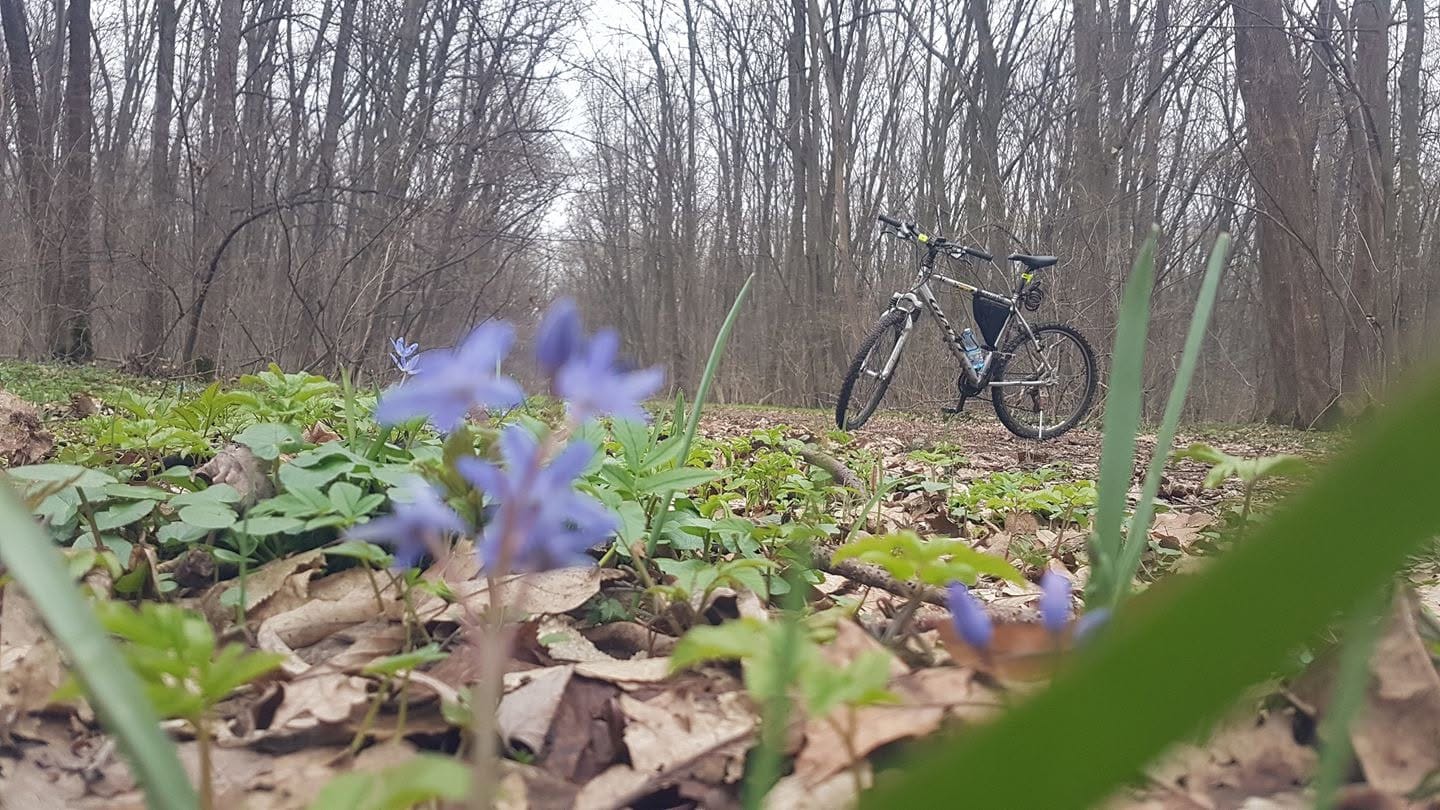
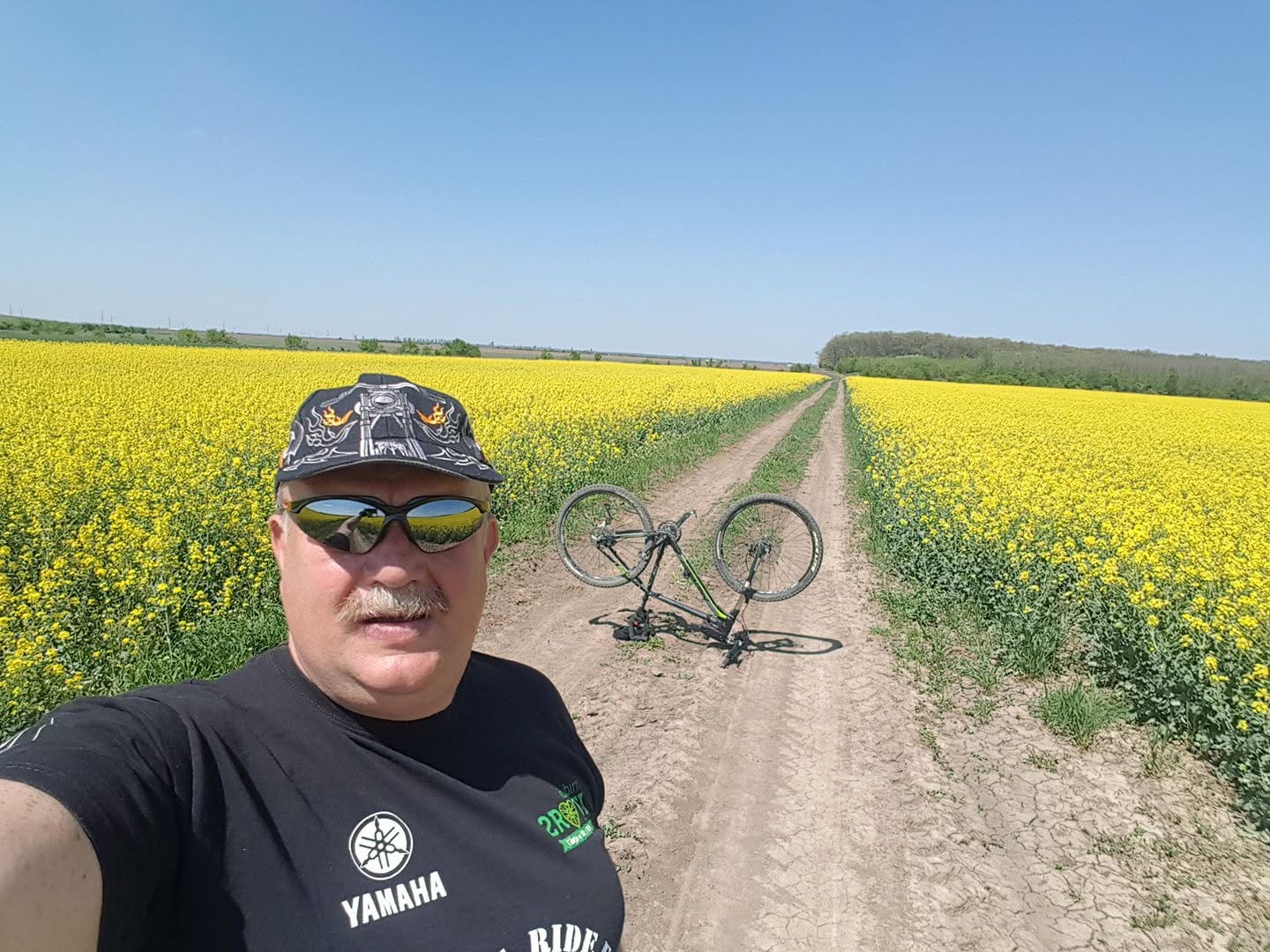
Weekends, on the other hand, are his: the motorcycle, the bike, the kayak, travel. Sometimes he builds things around the yard and finally carries out old plans, put off because he was "on the motorcycle, with the camper in Vama Veche or somewhere else."
Summers and beautiful weekends seem plentiful, but there are actually very few of them.
One piece of advice
For those still hesitant to try affiliate marketing, Tudor has just one piece of advice. "Give it a try. Until you try, you won't know if you're good at it and if it suits you. Obviously, you can't win the lottery if you don't play."





Articole Recomandate


BusinessLeague Pulse W42: 48,302 Sales, +14.9% Clicks YoY & 100% Network Fee for Freelancers in Round 3
The complete breakdown of Week 42 (October 12–18, 2026) in BusinessLeague: 48,302 sales (+5.4% YoY), over 1.28 million clicks (+14.9% YoY), Operation Robin Hood expanding to Freelancers, and all Round 3 rankings.
Georgiana Irimus (Apiland.ro): We're preparing Black Friday discounts, but the ApiLand anniversary remains our special moment of the year
On its 24th business anniversary, Apiland.ro answered a few of our questions courtesy of Georgiana Irimus. A conversation about progress, values and, of course, sales. ApiLand currently ranks first in the Start-Ups leaderboard, with more than 700 sales this round.

Pharma: Over 1.3 Million unique orders in 33 months across BusinessLeague
Pharma brings in one in five orders across the BusinessLeague ecosystem, but only 10.32% of the value: a category of small baskets, bought often and bought fast.
Announcing our September Affiliate Champions & Incentive Winners
At Business League by 2Performant, sustainable growth and peak Q4 performance are built on one solid foundation: strong, diverse, and productive relationships between affiliates and merchants.